Sunday, January 26, 2014

Glühwein & Other Mulled Winter Drinks


HAPPY NEW YEAR, FELLOW SPICE-LOVERS!!

There's nothing quite like a mug of hot spiced wine to warm the belly on a cold winter's day. This year I had the wonderful opportunity to partake in the Hamburg Christmas Market festivities and indulge in one of my favorite winter holiday traditions...mulled wine! I was amazed by the wide variety of this hot beverage available amidst the market labyrinths (not to mention the tasty culinary selection to accompany them) 
So, as any connoiseur would do, I made it my mission to try them all!   

Prost! - ein Toast!


What exactly is Glühwein?

Glühwein (translating to, "glow-wine," due to the hot irons once used for mulling) is usually prepared from red wine, heated and spiced with cinnamon sticks, cloves, star aniseed, citrus fruits, sugar and ocasionally cardamom and vanilla pods. If you fancy a lighter flavor, white wine can also be used to make Weißer Glühwein (white mulled wine). 

These mulled wines are sometimes drunk mit Schuss (with a shot), which means that rum or some other liquor has been added. For me, the extra shot was overkill--and especially precarious if you're on an extended glühwein crawl.  


Fruit wines, such as blueberry wine and cherry wine, are occasionally used instead of grape wine in some parts of Germany. Heidelbeerpunsch (mulled blueberry wine) was my personal favorite. Another tasty option is Apfelpunsch (spiced apple cider), with an added shot or rum for those who want a punch to their punsch. If you need a break from the booze, but are still craving a hot drink, there is always the non-alcoholic Kinderpunsch ("kiddie punch") option.

Feuerzangenbowle (translating to "fire tong punch") is another popular variant of traditional Glühwein in Germany, and is shown in the photos below. It shares the same recipe, but for this drink a rum-soaked sugarloaf is set on fire and allowed to drip into the giant copper pots which hold the brew. The result is divine!

                                 The dramatic Feuerzangenbowle in the making 

Although mulled wines are the most popular choice, one must not forget the tasty Eierpunsch (egg punch), which is made with egg yolks, sugar, white wine and vanilla. Sometimes whipped cream or custard is added to make it frothier.
A typical recipe of Eierpunsch with white wine to serve 3-4 persons would be:
  • 1 bottle of white wine (750 ml)
  • 4 eggs (or 8 egg yolks)
  • 5 tablespoons of sugar
  • one packet of vanilla sugar (equivalent of 2 tsp sugar and 1 tsp vanilla extract)
  • Pinch of cinnamon
  • 4 cloves
  • 250 ml of strong tea
  • lemon or lemon juice


Prepare the 250 ml of tea and allow to cool. Whisk the 5 tablespoons of sugar into the eggs (or egg yolks) and add a little cold white wine and then beat vigorously. Add the vanilla sugar to the mixture and pour in the remaining white wine, cinnamon, the cloves, lemon juice and the cooled tea. It is also optional to add 50ml of dark rum to the mixture. Transfer the mixture to a pan and gently heat. Do not let the mixture heat too quickly. Before it comes to a boil, remove from the heat. The mixture should be foaming on top. Remove the four cloves. Serve hot and foamy in a mug with whipped cream on top and a ginger cookie. (This recipe can also be made with red wine. However, do not add the 250 ml of tea to the mixture. This will also affect the number of servings too.)

                        A typical hot drink menu at one of the many market stalls I visited


I wish you all a fruitful and spicy 2014, and recommend that you do your own mulled wine tasting in one of the many traditional German Christmas Markets next holiday season!!


Tuesday, October 29, 2013

Ginger Beer Magic


As the self-proclaimed "Ginger Gypsy", one might suspect that I have a special place in my heart and my palate for ginger root. Well, I do...and especially for ginger beer (the spicier, the better!) 


Unfortunately, finding ginger beer is not an easy task here in Spain, and I've mainly had to rely on friends and family to ship it or smuggle it over from abroad. However, I've learned that with a little work you can skip the bottled stuff and make it yourself. Your homemade soda can also be used to create tempting cocktail combinations that are perfect for any gathering of ginger-lovers! (see below) 

First of all, let me clarify what Ginger Beer is...  

The Origin
It all started with brewed ginger beer, which is said to have originated in Yorkshire, England in the late 1700s. Eventually the popularity spread across the pond and Americans were also enjoying this refreshing beverage. Ginger beer was brewed with ginger, sugar, water, lemon juice and a bacteria/yeast mix called "ginger beer plant" (GBP) -- the final product orginally had an alcohol content of up to 11 percent.
So, what's the difference between Ginger Beer and Ginger Ale?
The main difference between ginger beer and ginger ale is that ginger beer is brewed (fermented) but ginger ale is just carbonated water that's been flavored with ginger.  Ginger ale is said to have been first invented in Ireland in 1851, but modern-style ginger ale was created many years later, in  1907, by a Canadian, and it eventually became Canada Dry. Today's brewed ginger beers are categorized as non-alcoholic drinks because their alcohol content is less than 0.5 %. 
Since ginger beers are naturally fermented, they have less carbonation and often develop a beer-like head when poured into a glass. However, the difference isn't so clear cut anymore. Many small soda companies naturally brew both their ginger beers and ginger ales. And some large-scale soda companies that still produce ginger beer actually make it by adding a stronger ginger flavor to carbonated water. So really the difference becomes merely one of taste.


Try this recipe for Authentic Ginger Beer:        
     Old Fashioned Ginger Beer Recipe


Ginger Beer Concentrate
Mix this fiery ginger beer concentrate with soda water to make a homemade non-alcoholic ginger beer. Adjust the amounts of sweetener, soda water and lime to suit your taste. Preserve leftover concentrate by freezing it in ice cube trays.
Author: 
Ingredients
  • 1 1/4 pounds fresh ginger, roughly peeled and chopped into 1-inch chunks
  • 2 cups filtered water, divided
  • 1 cup freshly squeezed lime juice (from 4 to 5 limes), plus more as garnish
  • 1 1/4 to 1 1/2 cups of agave nectar, honey or pure cane sugar syrup (to taste)
  • soda water
Instructions
  1. In a blender or food processor, liquefy the ginger and 1 cup of water for 3 minutes. Strain the juice into a large bowl or pitcher. Transfer the ginger pulp back to to the blender or food processor, add another 1/2 cup of water, and liquefy again. Strain again, adding the liquid to the first batch. Again transfer the pulp along with another 1/2 cup water, liquefy again, and add to the liquid. Press on the solids with the back of a big spoon to squeeze out as much of the juice as you can.
  2. Discard the mashed solids and rinse out your blender/food processor. Pour the liquid into the blender/food processor. Pour in the lime juice and 1 1/4 cups sweetener. Blend for 30 seconds. To taste for sweetness, pour about 2 ounces ginger concentrate into a glass along with about 8 ounces of soda water. If it’s not sweet enough, blend in more sweetener until it reaches your preferred sweetness.
  3. Refrigerate up to 3 weeks. Shake before serving. Add a squeeze of fresh lime to your ginger beer before serving. Fresh mint and/or candied ginger make nice garnishes as well.


Cocktails Calling?

The ginger beer soda recipe above, or the bottled stuff, can be mixed with a variety of ingredients to create new and festive taste sensations. Try it with dark rum  for the Carribean flair of Dark 'N' Stormy. Add it to vodka for a Moscow Mule or gin for a Foghorn .


However, I've recently discovered my favorite cocktail, which I stumbled upon by accident. I call it the "Ginger Daniels".

Ginger Daniels

- fill glass with ice 
- add a generous shot of Jack Daniels whiskey
- natural lime juice (about 1/2 lime)
- top with ginger beer
- add a couple of fresh basil leaves (slighty bruised) as garnish 


For the true ginger beer connoiseur...
Best Ginger Beers of 2013

                                                        May ginger beer bring you lots of autumn cheer!!


Friday, September 27, 2013

Salt of the Earth


"Salt is born of the purest parents: the sun and the sea"
Pythagoras (580 BC - 500 BC)


A Short History of Salt

As award-winning 20th century author Margaret Visser wrote, "Salt is the only rock consumed directly by man. It corrodes but preserves, desiccates but is wrested from the water. It has fascinated man for thousands of years, not only as a subtance he prized and was willing to labour to obtain, but also as a generator of poetic and mythic meaning. The contradictions it embodies only intensify its power and its links with the experience of the sacred."

Salt, a crystalline mineral that is composed primarily of sodium chloride (NaCl), has played a prominent role in determining the power and location of the world's most prominent cities. It created and destroyed empires. The salt mines of Poland led to a vast kingdom in the 16th century, only to be destroyed when Germans brought in sea salt (which was considered superior at the time). Venice fought and won a war with Genoa over salt. However, Christopher Columbus (Cristoforo Colombo) would later destroy the Mediterranean trade by introducing the New World to the market.

In the early years of the Roman republic, roads were built to make transportation of salt to the capital city easier. It is commonly believed that Roman soldiers were occasionally paid with salt. They say the soldiers who did their job well were "worth their salt.". The word 'salary' derives from the Latin word salārium, possibly referring to money given to soldiers so they could buy salt.


      A salt merchant guards his wares in Mopti, a town south of Timbuktu, Mali on the Niger river

During the late Roman Empire and throughout the Middle Ages, salt was a precious commodity carried along the salt roads into the heartland of the Germanic tribes. Caravans consisting of as many as forty thousand camels traversed four hundred miles of the Sahara bearing salt to sell at inland markets, sometimes trading salt for slaves. Timbuktu, Mali was a huge salt and slave market.

Salt: Friend or Foe?


Is salt beneficial or detrimental to our health? I grew up in a very "health conscious" household in which SALT was practically a dirty word. Especially in the US, salt has achieved a reputation as the a notorious seasoning which will inevitably send your blood pressure through the roof, and send you to an early grave.

The USDA recommends that individuals should consume less than 2,300 mg (approximately 1 teaspoon of salt) of sodium each day. They also recommend that people with hypertension and older adults limit their intake to a maximum of 1,500 mg of sodium per day.


While it's true that salt intake should be moderate, there are numerous benefits of salt consumption and use:
Digestion
When eaten with food, sea salt can aid in stimulating the salivary glands which is an important first step in the digestion process. Not to mention it makes meat and vegetables taste amazing in the process. Salt is also needed further down the tube, where it prevents buildup in the digestive tract, which can lead to constipation.
A strong immune system
Sea salt is the world’s oldest antibiotic, and has great anti-viral properties. Even Ben Franklin would drink sea salt water before bed when he was sick and swore that he felt great the next day. 
Great for your skin
Try adding some sea salt to your next bath. Just add about 1/2 cup to 1 cup of sea salt into your warm bathwater. Soak for about 20 minutes, and let the salt soak in. It is very soothing to the skin and body. Sea salt draws out toxins that are in our bodies. Some people are known to take a sea salt/epsom salt bath while on a detox diet because it helps the process along by pushing the toxins out of the body. You can also find many products like sea salt soaps, masks, toners, and cleansers to help get rid of acne.
Helps you to breathe better
Sea salt is also known to be a great help with someone who suffers from asthma, bronchitis and hay fever to name a few. Salt lamps emit healthy negative ions into the air, which feed our cells. Back in the 1800′s, a Polish physician proved that by breathing the ionized air in salt mines cured respiratory illnesses.  The same can be said for breathing the refreshing salt air near the ocean, for a calmer, relaxing feeling. We don’t even realize how many positive ions all of our electronics devices release into the air, which drain on our energy and health. By putting a salt lamp in your home, you can offset this problem.

Recent studies have claimed that too little salt in your diet may even be bad for you:
Is eating too little salt risky?

What’s the Difference Between Table Salt and Sea Salt? 

Regular table salt may come from rock salt, a natural salt deposit in the earth, or from evaporated sea water. When it’s labeled sea salt, you know it came from sea water. Once both types have been cleaned up and purified, there’s really no chemical or nutritional difference between the two. If you were to dissolve sea salt in water, it would be virtually indistinguishable from regular table salt. The biggest difference is that sea salt can be processed in a way that produces larger crystals. Sea salt can also be processed into fine crystals, just like regular table salt.
So, which salt is really better for you? Any of the larger grain salts, especially kosher, will contain the least amount of sodium due to the fact that their volume is a lot larger than smaller grain salts, resulting in less salt and, in turn, less sodium per serving. Technically, no salt really contains less sodium than another; it's all about the size of the salt grains.

Should You Choose Iodized Salt?

You can buy both regular and sea salt with or without added iodine. Iodine is a nutrient that, among other things, helps prevent mental retardation. It’s also being studied as a possible issue in ADHD.  Iodine deficiency used to be fairly common—and in third world countries, it still is. Iodized salt was proposed as an easy way to prevent iodine deficiency—and, for the most part, it has worked pretty well.


A Gourmet Palette

Nowadays, it is quite common to find a broad range of "gourmet salts" in a rainbow of colors and textures at specialty shops. While their prices may be prohibitive, I recommended occasionally experimenting with different types of salt in the kitchen to "spice up" your savory dishes. For more info on "specialty" salts, check out these articles:

10 Salts to Know
Dead Sea Salt
How make your own flavor-infused sea salt

So, are gourmet salts healthier? These salts do contain trace amounts of various minerals, like potassium and magnesium, as well things like strontium, fluoride and cadmium. There’s also the chance that you’re getting minerals you don’t really want, like mercury or arsenic.
Conclusion
Despite having its various pros and cons, salt can be a valuable asset to our diet and lifestyle. At the end of the day, everything in moderation!

   Sunrise reflections on the Salar de Uyuni (Bolivia, 2015)

Saturday, September 14, 2013

Moringa: The Miracle Tree

As I was pondering my next blog post topic, a good friend mentioned a magazine article he had just read, which described the amazing properties of a tree called "Moringa". I had already heard about its skin-care benefits, but had no idea what other secrets it held. Here's what I found out...  


What is Moringa?

Moringa..sounds like a Latin dance or a cocktail, doesn't it? 
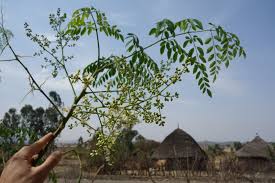
It's a tree that is native to parts of Africa and Asia, and is entirely edible. It may actually be the key to ending malnutrition in many parts of the world. Normally, I'm quite skeptical if I hear the word "miracle" next to anything, but if what I've discovered about this tree is true, it may just be a miracle after all. 

Moringa oleifera, known popularly as drumstick tree (due to its long pods) is an herbaceous plant grown for its nutritious greens, flowers, and mineral-rich pods.  The name is derived from the Tamil word Murungai.  It is a well-recognized member in the Moringaceae family of trees and is thought to have originated in the sub-Himalayan ranges of India. Moringa stenopetala, commonly known as cabbage tree, is its African cousin, which has its origins in Ethiopia.

The word is out...

Biochemists, natural scientists, and healthcare workers are busy substantiating ancient claims of Moringa’s effectiveness in treating more than 300 conditions. Their research has led to the documentation of its astonishing range of natural vitamins, minerals, and other nutrients. The leaves are the most nutritious part of the plant, being a significant source of B vitaminsvitamin C, vitamin A and beta-carotenevitamin Kmanganese and protein, among other essential nutrients.


  Moringa Oil


Moringa oil, or Ben oil, is obtained by pressing the seeds of the Moringa oleifera tree. It has nourishing and emollient properties, giving it benefits for use in skin and hair care products. It is rich in vitamins A and C and contains antiseptic and anti-inflammatory properties, which help heal minor skin conditions quickly (such as cuts, bruises, burns, insect bites, rashes and scrapes).  Moringa oil is among the most sought after oils to produce skin care products and cosmetics because of its various antioxidants and skin rejuvenating qualities. These antioxidants do wonders to prevent aging. Its use can be traced back to the ancient Egyptians, who placed vases filled with moringa oil inside their tombs.


Uses of Moringa powder, fresh leaves and pods:

Moringa powder can be used as a daily dietary supplement; as an ingredient in soups, sauces, breads, or desserts, or as a nourishing tea. If you don't have access to the fresh leaves, there are numerous herbal product companies which sell organic moringa powder and dried leaves.


As a supplement, it is recommended that you start by taking ½ teaspoon of Moringa everyday for about 3 days or for one week in order to get the body accustomed to it and to minimize strong detoxification effects. After this, gradually increase daily intake to the recommended amount. Add the appropriate amount to water, juice, smoothies, milk or milk alternatives, shake, blend, and enjoy. In pure water, Moringa will settle to the bottom, so remember to shake before drinking.

Culinary Uses 


When cooking with Moringa, add to recipes in which you would typically use spinach or other  green vegetables. In India, people add Moringa leaves to curries and soups. In African countries like Senegal, Moringa is traditionally added to make sauces and stews. I suggest experimenting with and adding the powder to your favorite foods. In India and Southeast Asia, the seed pods are boiled in stews and curry dishes, and have an appearance similar to okra.


Moringa Tea or Coffee
                 
Do you have a coffee maker? Just substitute moringa powder for the coffee. Use one tsp of moringa for every cup of water. Spoon it in the coffee filter just like you would coffee. This is a delicious green tea that goes well with snacks, meals or by itself.  Add some lemon peel and a little honey for a stimulating nutritious beverage.


Recommended Viewing:

                                    Moringa Tree Documentary (10 minutes)


Sunday, July 28, 2013

Basil: From Protection to Pesto


With its intense aroma, Basil is one of those herbs with such potent oils that a mere brush against the foliage releases an unmistakable burst of fragrance - an aroma which has been attributed to strengthening psychic awareness, clearing homes of negative vibrations and domestic tension, attracting love, money and luck and even guiding a soul into the afterlife.


A Magical Herb

Common basil (Ocimum basilicum), which is of the mint family, is an herb that has been cultivated from more than 5,000 years. It is native to Asia, and is thought to have originated in India. The word Basil comes from the Greek Basilikos, meaning "of kings/royalty". Basil represents many things in many different countries and cultures: Jewish folklore says that basil gives you strength when fasting; in Italy basil represented love; Africans once thought basil protected you from scorpions; in some European countries, they put basil in your hands after death to ensure safe travel into the afterlife.


Basil was widely used by the Ancient Egyptians, who prepared it, together with other essences, for religious ceremonies. It appears to have been used as an ingredient for the preparation of the balms used for mummification. In the Middle Ages, it was believed to hold magical properties and was used as a defense against "basilisk", a monster which resembled a poisonous serpent. Basil was probably introduced to Europe by Greeks and Romans, coming from the commercial routes which crossed the Middle East. Ancient Romans considered it the symbol of lovers, and it was also used as an aromatic herb in cooking.


In its homeland of India, the use of basil in cooking is quite limited, but a type of basil (Ocimum Sanctum or "holy basil"), known there as "Tulsi",  is considered to be a very sacred plant. In Hindu mythology, Tulsi symbolizes the goddess Lakshmi, the wife of Vishnu, who is one of the religion's most important deities. The herb has been valued for centuries because of its benefits for the mind, body, and spirit, and produces a calming effect on the mind, making it an ideal stress reliever and is used in aromatherapy. In Ayurveda, traditional Indian medicine, basil is used as a remedy for many diseases. 

In India it is also common to plant basil in order to check the salubrity of the soil - a hearty basil plant means healthy soil. Moreover, it is believed the presence of Tulsi can keep evil spirits away while attracting divine blessings. Because of this, it is often planted by the front door of a house.  The leaves are used during religious ceremonies to aid in family wellness. 


Medicinal Properties
Some studies have suggested that basil oil has traces of antitoxins and have the potential use for treating cancer. In India, basil is known to be used for the treatment of stress, asthma, diabetes and removing of pimples. It is also a source of vitamin K, iron, calcium, vitamin A, manganese, magnesium, vitamin C, and potassium. It is good for the heart, because it helps to prevent build-up in the arteries and fights free radicals. The magnesium helps blood vessels to relax, which increases blood circulation.


So many varieties to choose from

Fresh basil has a pungent flavor that some describe as a cross between licorice and cloves. It's a key herb in Mediterranean cooking, and essential to the delicious Italian pesto. Most varieties of basil have green leaves, but opal basil, is a beautiful purple color. Lemon basil and cinnamon basil have green leaves but their perfumed fragrance and flavor matches their respective names. 

Basil is a summer herb, but can be grown successfully inside during the winter in a sunny window. It's plentiful during summer months, and available year-round in many markets. Choose evenly colored leaves with no sign of wilting. 


Storage Tips 

Refrigerate basil, wrapped in barely damp paper towels and then in a plastic bag, for up to 4 days. Or store a bunch of basil, stems down, in a glass of water with a plastic bag over the leaves. Refrigerate in this manner for up to a week, changing the water every 2 days. To preserve fresh leaves, finely chop the cleaned basil and combine it with a small amount of olive oil. Freeze in tiny portions to flavor sauces, salad dressings, etc. 


Try these mouthwatering basil recipes: 


Strawberry-Basil Sangria
Fresh Peach-Basil Lemonade
Heavenly Basil Hummus
Traditional Pesto
Bruschetta with tomato and basil
Insalata Caprese
Gingered carrots with cumin and basil
Thai spicy eggplant with sweet basil


Wednesday, July 17, 2013

Cilantro: Love it or hate it, it's good for you!


Living in a country known for its widespread aversion to cilantro, it's difficult for me to comprehend why so many people detest it. Personally, I can't get enough of this fragrant herb, and I don't hesitate to include it in just about any savory dish, especially Latin American and Asian cuisine. I nearly always have a fresh bunch on hand in the fridge...Spaniards beware!  


What is it?

Cilantro (Coriandrum sativumin an herb with wide delicate lacy green leaves and a pungent aroma and flavor. The seed of the cilantro plant is known as coriander. Although cilantro and coriander come from the same plant, their flavors are very different and cannot be substituted for each other. Some countries refer to the cilantro as coriander, so any references to "fresh coriander" or "coriander leaves" refer to cilantro. Note: "Culantro" is an herb realted to cilantro that is widely used in dishes throughout the Caribbean, Latin America, and the Far East. 

All parts of the plant are edible, but the fresh leaves and the dried seeds are the most commonly used in cooking. Coriander roots have a deeper, more intense flavor than the leaves. They are used in a variety of Asian cuisines. They are commonly used in Thai dishes, including soups and curry pastesCoriander is commonly used in Middle Eastern, Mediterranean, Indian, South Asian, Mexican, Latin American, Chinese, African and Southeast Asian cuisine. 


Why should we eat it?                                       

Health benefits of cilantro (coriander)
  • Cilantro contains no cholesterol; however, it is rich in antioxidants, essential oils, vitamins, and dietary fiber, which help reduce "bad cholesterol" while increasing "good cholesterol" levels.

  • The herb is a good source of minerals like potassium, calcium, manganese, iron, and magnesium. Potassium is an important component of cell and body fluids that helps control heart rate and blood pressure. Iron is essential for red blood cell production. 

  • It is also rich in many vital vitamins, including folic-acid, riboflavin, niacin, vitamin-A, beta carotene and vitamin-C, which are essential for optimum health. Vitamin-C is a powerful natural antioxidant. 100 g of cilantro leaves provide 30% of daily recommended levels of vitamin-C.

  • It's a rich source of Vitamin-A, an important fat soluble vitamin and anti-oxidant, is also required for maintaining healthy membranes and skin and is also essential for vision. Consumption of natural foods rich in vitamin-A and flavonoids offers protection from certain cancers.

  • Cilantro is one of the richest herbal sources of Vitamin K. Vitamin-K plays a role in bone mass building by promoting osteotrophic activity in the bones. It also has established role in the treatment of Alzheimer's disease patients by limiting neuronal damage in their brain. Eaten daily, it can also help remove harmful mercury from brain tissue. 

  • Coriander seed oil has been found application in many traditional medicines as analgesic, aphrodisiac, anti-spasmodic, deodorant, digestive, carminative, fungicide, lipolytic (for weight loss) and a stimulant.


How to choose the best bunch:

Fresh cilantro is readily available in the most markets and herb stores year-round. Always choose fresh leaves over the dried herb, since it is superior in flavor and richer in many vital vitamins and anti-oxidants. Look for vibrant green color leaves and firm stems. It should be free from any kind of spoilage or yellowing.

Try to buy fresh leaves from the local organic farms since the herb has an intense refreshing flavor in addition to that it will assure you of superior quality and free from pesticide residues.

Once at home, discard roots and any old or bruised leaves. I recommend cutting the base of the stem, placing it in a glass of water (like flowers) and covering the bunch with a loose transparent bag to maintain freshness. Use it early as possible, since it loses flavor and nutrients quickly if kept for longer periods. 

How to prepare: Wash and pat dry before using, as the leaves attract sand.

Matches well with: avocado, chicken, fish, lamb, lentils, mayonnaise, peppers, rice, salads, salsas, shellfish, tomatoes and yogurt.


If you are a fan of this versatile herb, try out some of these recipes:


Are you a cilantro hater? New studies show it could be rooted in your genes:

Few herbs have acheived such notoriety as to actually spark a "hate site":